


LokOS
Syllabus: GS2/Governance
Context
- Self-Help Entrepreneur-Livelihoods and Enterprise Application for Prosperity and Sustainability (SHE-LEAPS) was recently launched and is implemented under the LokOS platform.
About
- It is a digital platform for empowering women associated with Self-Help Groups (SHGs) across rural India, it is developed by the Digital India Corporation.
- It provides a unified platform for enterprise creation, performance tracking, and business management.
- It supports farm and non-farm enterprises, strengthening a sustainable and resilient rural economy.
About LokOS Platform
- LokOS (Lok = People, OS = Operating System) is a web and mobile platform under the Deendayal Antyodaya Yojana-National Rural Livelihoods Mission (DAY-NRLM).
- It was developed by the Digital India Corporation (DIC) under the aegis of the Ministry of Rural Development (MoRD) and was launched in 2022.
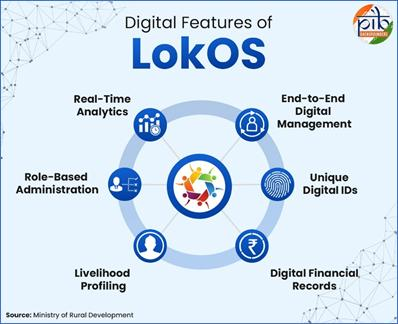
- It helps in managing Self-Help Groups (SHGs) and Community-Based Organizations (CBOs) by digitizing member records, profiles, savings, lending, repayments, financial transactions, livelihoods, and convergence initiatives.
Source: PIB
Assam Sells India’s First Commercially Produced Matcha Tea
Syllabus: GS3/Economy
Context
- Assam has become the first state in India to commercially produce Matcha tea, with production commencing at the Chota Tingrai Tea Estate in eastern Assam’s Tinsukia district.
Matcha
- Matcha is made after shading Camellia sinensis tea leaves for three to four weeks before harvest.
- Blocking 90% of sunlight from the leaves boosts their chlorophyll and amino acid levels, and gives its characteristic bright green colour and rich umami flavour.
- Matcha originated through cultural exchanges between China and Japan during the premodern period.
- It developed from earlier powdered tea practices in China that were later introduced to Japan by Zen Buddhist monks.
- China is the largest producer of matcha tea.
- The USA, Canada, UK, Germany, France, Australia, Singapore, South Korea and Middle Eastern countries are some of the main markets for match tea exports.
Source: TH
Mumbai-Ahmedabad High Speed Rail (MAHSR)
Syllabus: GS3/Infrastructure
Context
- India is nearing completion of its first bullet train corridor – the Mumbai-Ahmedabad High Speed Rail (MAHSR).
About
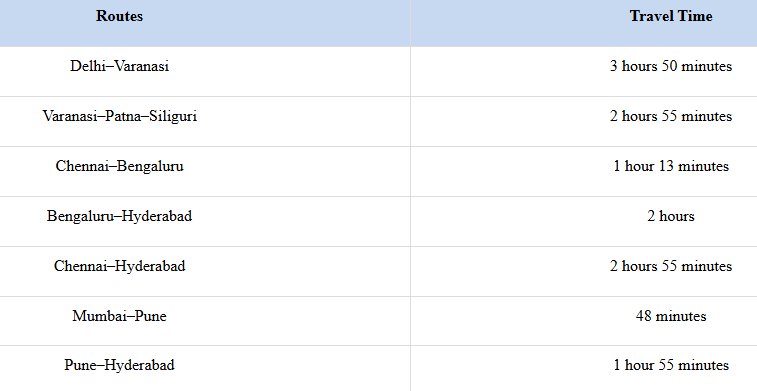
- The corridor will connect Mumbai and Ahmedabad in about 1 hour 58 minutes. It covers a total length of approximately 508 kilometres.
- 12 stations have been planned along the route.
- It is expected to commence in August 2027. The first section to open will be from Surat to Vapi.
- The corridor has a design speed of 350 kmph and an operational speed of 320 kmph.
- The MAHSR Project is being developed using Japanese Shinkansen technology and operational practices.
- Track System: J-Slab ballastless track technology is being introduced in India for the first time.
- Track Construction Bases: Dedicated Track Construction Bases are being developed. These are for the storage and handling of rails, track slabs, machinery, and other equipment.
Seven High‑Speed Rail Corridors
- Seven high-speed rail corridors, covering nearly 4,000 kilometres, have been identified for future development.
Source: PIB
Polygraph Test
Syllabus: GS3/Science and Technology
Context
- Pune Police’s request to conduct a polygraph test on high profile murder has revived the debate over the use of lie detector tests in criminal investigations.
What is a polygraph test?
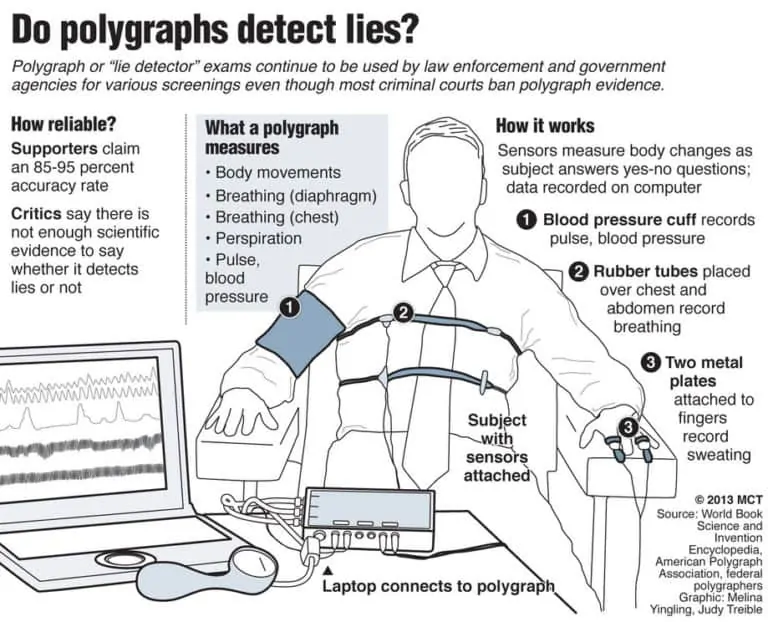
- A polygraph test also called lie detector test operates on the presumption that specific physiological responses are triggered when a person is lying.
- The test is administered by attaching instruments like cardio-cuffs or sensitive electrodes to the suspect to measure variables such as blood pressure, galvanic skin response (a proxy for sweat), breathing and pulse rate.
- As questions are posed, each physiological response is assigned a numerical value to determine whether the individual is telling the truth or being deceptive.
- In India, a polygraph test is used only as an investigative tool and cannot by itself be treated as evidence in a court of law. But if the test results lead police investigators to obtain new evidence, that evidence may be admissible in court under Section 27 of the Indian Evidence Act.
- A polygraph test can be conducted only with the voluntary consent of the person concerned.
- In Selvi v. State of Karnataka (2010), the Supreme Court held that the involuntary administration of polygraph, narco-analysis, and brain-mapping tests violates Article 20(3), which protects against self-incrimination, and Article 21, which guarantees the right to life and personal liberty.
Narco-Analysis
- It involves the injection of a drug called sodium pentothal into the accused, inducing a hypnotic or sedated state.
- The assumption is that a subject in such a state is less inhibited and is more likely to divulge information.
- Because the drug is thought to weaken the subject’s resolve to lie, it is often referred to as a “truth serum.”
Source: IE
Radio Telemetry
Syllabus: GS3/ Science and Technology
Context
- Recently the death of a radio-tagged white-rumped vulture has highlighted the importance of radio telemetry in monitoring wildlife and identifying conservation threats.
What is Radio Telemetry?
- It is a technique to locate animals and track their movements. It uses radio signals to determine location.
- A radio telemetry system is made up of three parts: a radio transmitter, a radio antenna and a radio receiver.
- Working:
- The radio transmitter is worn by the animal and is the part that transmits, or sends, the radio signal.
- The antenna is used to pick up the radio signals, which are then transformed into a beeping sound by the receiver.
- As the receiver gets closer to the transmitter, the beeps get louder, meaning the animal wearing the transmitter is close by.
- The researcher uses this sound to locate and follow the animal wearing the transmitter.
Source: TH
7th National Water Awards
Syllabus: Miscellaneous
Context
- Ministry of Jal Shakti has launched the 7th National Water Awards on the Rashtriya Puraskar portal of Ministry of Home Affairs.
About
- The Awards were introduced in 2018 by the Ministry of Jal Shakti, and first were given in 2019.
- Eligibility for the awards: Any State, District, Urban Local Body, Dam Own Agencies, & Industry who have done good work in the field of water conservation and management is eligible.
- The awards were introduced to recognize and encourage exemplary work and efforts made by States, Districts, individuals and organizations across the country in accomplishing the government’s vision of Jal Samridh Bharat.
- It aims to sensitize the public about the importance of water and motivate them to adopt the best water usage practices.
Previous article
Delhi Draws up 7-year Air Pollution Mitigation Plan
Next article
Landslide
